For signage contractors, retail display manufacturers, architectural decoration specifiers, and commercial branding teams, orange is one of the most visually powerful colors available—bold, high-energy, immediately attention-grabbing, and strongly associated with brand identity in sectors from food and beverage to logistics, retail, and safety signage. But orange is also one of the colors that B2B buyers worry about most when specifying outdoor materials, and for good reason. In high-UV environments—the Middle East, Australia, Southeast Asia, high-altitude markets, and any location with intense year-round sunlight—poorly formulated orange plastic can begin showing visible fading, yellowing, whitening, or gloss loss within months of installation. A brand-new orange sign that looks vibrant and premium on installation day can look faded, chalky, and neglected within a single season if the material specification is wrong.
Orange acrylic sheet—colored PMMA sheet designed to deliver a bright, consistent orange appearance with the optical clarity, surface gloss, and fabrication performance that signage and display applications require—is the material of choice for buyers who need outdoor orange visual performance that lasts. But not all orange acrylic sheets are equal. The difference between a sheet that maintains its color and gloss through years of outdoor UV exposure and one that fades within months lies in the formulation: the quality of the PMMA resin, the stability of the orange pigment system, the UV absorber additives incorporated into the sheet, and the consistency of the production process that brings these components together.
AML's orange acrylic sheets are positioned for vibrant aesthetics, impact resistance, UV resistance, indoor and outdoor suitability, lightweight handling, and easy fabrication—with color codes including AN265 and AN266 offering different light transmission levels for different signage and display applications. This guide covers the complete picture for B2B buyers evaluating outdoor orange acrylic: why orange plastic fades faster than many other colors in outdoor environments, what orange acrylic sheet is and how UV-stabilized PMMA differs from ordinary colored plastic, how UV protection mechanisms work together to prevent fading in extreme sun exposure, how to select the right sheet specification for specific outdoor applications, and what procurement and maintenance practices protect color performance over the sheet's service life. Secondary keywords relevant to this decision—UV-resistant orange acrylic, outdoor signage materials, weatherable PMMA sheets, and fade-resistant colored plastic—are addressed throughout.
Why Orange Plastic Fades Faster Outdoors—and Why This Creates Serious Commercial Consequences for B2B Buyers
The commercial case for specifying UV-resistant orange acrylic rather than standard colored plastic starts with a clear understanding of why orange is particularly vulnerable to outdoor UV degradation—and why fading creates consequences that go well beyond appearance.
The Photochemistry of Orange Fading in Outdoor Environments
Orange color in plastic sheets is produced by pigment systems that absorb specific wavelengths of visible light—reflecting the orange portion of the spectrum while absorbing blue and violet wavelengths. This selective absorption is what creates the visual orange effect, but it also means that the pigment molecules are continuously absorbing high-energy light—including the UV radiation that accompanies visible sunlight—and this energy absorption drives the photochemical reactions that cause pigment degradation and color fading.
Orange pigments are particularly vulnerable to UV-driven photodegradation because the wavelengths they absorb overlap significantly with the UV and near-UV portion of the solar spectrum. As pigment molecules absorb UV energy, they undergo chemical reactions that alter their molecular structure—changing their light absorption characteristics and causing the color to shift toward yellow, white, or pale orange. In low-quality colored plastic sheets where the pigment system is not stabilized against UV degradation, this process can produce visible fading within months of outdoor installation in high-UV environments.
The polymer matrix of the sheet—the PMMA or other plastic resin that holds the pigments in place—is also subject to UV degradation. UV radiation can break polymer chains, causing surface chalking, micro-cracking, and gloss loss that further degrade the visual appearance of the sheet even if the pigment itself has not completely faded. In low-quality formulations where neither the pigment nor the polymer matrix is adequately stabilized, the combined effect of pigment fading and polymer degradation can make an orange sign look old and neglected within a single outdoor season.
The Commercial Consequences of Fading That B2B Buyers Must Manage
For B2B buyers—signage contractors, retail display manufacturers, architectural decoration specifiers, and brand identity teams—fading is not simply an aesthetic problem. It creates a cascade of commercial consequences that affect project profitability, client relationships, and business reputation. Warranty claims from clients who specified outdoor orange signage and received faded panels within the warranty period create direct financial liability. Replacement costs for faded panels—including material cost, fabrication cost, installation cost, and access equipment for elevated signage—can significantly exceed the original material cost. Brand inconsistency across a retail network where some panels have faded and others have not creates a visual quality problem that damages the brand's premium positioning. And the maintenance pressure of managing a portfolio of outdoor orange signage that requires frequent inspection and replacement creates ongoing operational cost that erodes project margin.
What Orange Acrylic Sheet Is and Why UV-Stabilized PMMA Outperforms Ordinary Colored Plastic
Understanding what orange acrylic sheet is—and why UV-stabilized PMMA provides fundamentally better outdoor color performance than ordinary colored plastic alternatives—is the technical foundation that B2B buyers need to specify outdoor orange signage materials with confidence.
Product Definition: Orange Acrylic Sheet as a Weatherable Visual Material
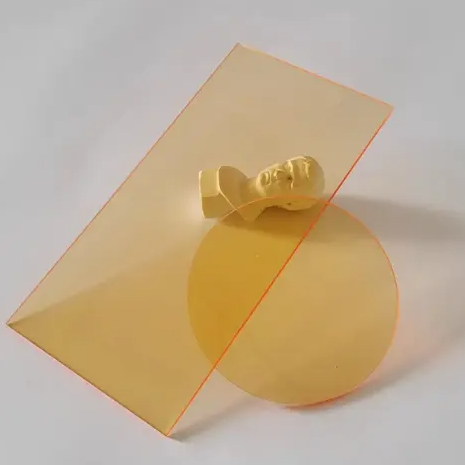
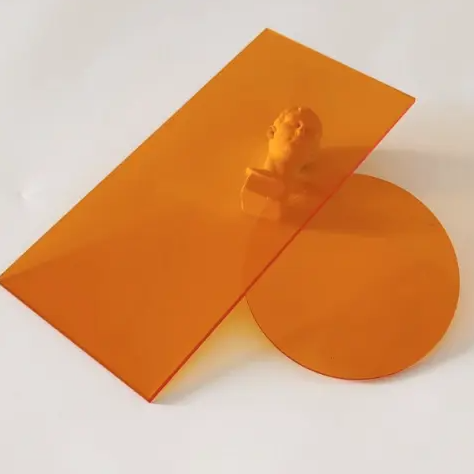
An orange acrylic sheet is a colored PMMA sheet designed to deliver a bright, consistent orange appearance while offering the optical clarity, surface gloss, rigidity, lightweight handling, and fabrication performance that signage, display, and architectural decoration applications require. PMMA—polymethyl methacrylate—is the polymer of choice for visual applications because it combines high optical clarity with strong color expression, smooth surface gloss, good weatherability, and compatibility with the cutting, shaping, bending, and bonding processes that signage fabrication requires.
AML's orange acrylic sheets are available in sizes including 1220 × 1830 mm and 1220 × 2440 mm, with color codes AN265 and AN266 offering different light transmission levels—AN265 with approximately 70 percent light transmission for more translucent orange designs suitable for backlit applications, and AN266 with approximately 13 percent light transmission for deeper, more saturated orange panels suitable for non-backlit signage and architectural decoration.
Why PMMA Provides Better Outdoor Performance Than Many Colored Plastic Alternatives
PMMA is widely selected for outdoor visual applications because its inherent material properties provide a stronger starting point for weatherability than many alternative plastic materials. PMMA's molecular structure is more resistant to UV-driven chain scission than many general-purpose plastics—meaning that the polymer matrix of a PMMA sheet maintains its integrity under UV exposure better than lower-cost alternatives, providing a more stable foundation for the pigment system and surface gloss.
The surface gloss of PMMA is also more durable than many alternative materials—PMMA maintains its smooth, high-gloss surface finish under outdoor exposure better than materials that are more susceptible to surface chalking and micro-cracking. This gloss retention is important for outdoor signage because surface gloss contributes significantly to the perceived brightness and visual impact of the orange color—a faded gloss surface makes the color appear duller and less vibrant even if the pigment itself has not significantly degraded.
How UV Protection Mechanisms Work Together to Prevent Orange Fading in Extreme Sun Exposure
The technical mechanism by which UV-stabilized orange acrylic sheet prevents fading in extreme outdoor UV environments—and why the combination of multiple protection strategies is more effective than any single approach—is the core technical knowledge that B2B buyers need to evaluate outdoor orange acrylic specifications for high-UV markets.
The Five-Layer UV Protection System in Weatherable PMMA Sheets
UV absorber additives are the primary active protection mechanism in UV-stabilized acrylic sheets. UV absorbers are chemical compounds incorporated into the PMMA matrix that preferentially absorb UV radiation—converting the harmful UV energy into heat rather than allowing it to reach the pigment molecules or drive polymer chain degradation. By intercepting UV radiation before it can cause photochemical damage, UV absorbers significantly reduce the rate of both pigment fading and polymer degradation. The effectiveness of UV absorber protection depends on the type and concentration of absorber used, its compatibility with the PMMA matrix and pigment system, and its own stability under prolonged UV exposure—UV absorbers that are themselves photodegradable will lose effectiveness over time.
Stable outdoor-grade pigment selection is the second protection layer—and the one that most directly determines the long-term color performance of the orange sheet. Outdoor-grade pigments are selected for their resistance to photodegradation—their ability to maintain their molecular structure and light absorption characteristics under prolonged UV exposure. The difference between an outdoor-grade orange pigment and a standard orange pigment can be the difference between a sheet that maintains its color for years and one that fades within months. For buyers specifying orange acrylic for high-UV markets, confirming that the sheet uses outdoor-grade pigments rather than standard colorants is one of the most important specification questions.
PMMA resin quality and formulation consistency is the third protection layer. The quality of the PMMA resin—its molecular weight distribution, purity, and UV stability—determines how well the polymer matrix resists UV-driven degradation over time. Consistent raw material quality and controlled production processes reduce batch-to-batch variation in UV stability and color consistency—ensuring that panels from different production batches maintain consistent color performance across a signage network.
Controlled pigment dispersion is the fourth protection layer. Uniform distribution of pigment particles throughout the PMMA matrix ensures consistent color across the full sheet area and reduces the risk of localized color variation that can make fading appear uneven and more visually obvious. Poor pigment dispersion can create areas of higher and lower pigment concentration that fade at different rates—producing a mottled, uneven appearance that is more visually damaging than uniform fading.
Surface gloss retention is the fifth protection layer—the visible indicator of overall UV stability performance. A UV-stabilized orange acrylic sheet that maintains its surface gloss under outdoor exposure maintains the visual brightness and premium appearance of the orange color even as the sheet ages. Surface gloss retention is the performance characteristic that most directly determines whether an outdoor orange sign continues to look vibrant and well-maintained or begins to look faded and neglected.
Performance Expectations for High-UV Markets
For buyers specifying outdoor orange acrylic for high-UV markets—the Middle East, Australia, Southeast Asia, and high-altitude locations—the realistic performance expectation for a properly formulated UV-resistant orange acrylic sheet is significantly better than for standard colored plastic. Rather than relying on general service life claims, B2B buyers should request outdoor weathering test data, color retention data after accelerated UV exposure testing, and project-specific recommendations based on the specific climate, installation angle, and exposure conditions of the project.
Orange Acrylic Sheet vs Alternative Outdoor Signage Materials: Selecting the Right Specification for the Application
The selection of the right outdoor signage material for a specific application involves evaluating the color performance, fabrication compatibility, structural requirements, and total cost of ownership of the available options—and understanding where UV-resistant orange acrylic provides the strongest combination of visual performance and practical outdoor durability.
Comparative Analysis of Outdoor Orange Signage Materials
UV-resistant orange acrylic sheet provides the strongest combination of vibrant orange color, surface gloss, optical clarity for backlit applications, fabrication flexibility, and outdoor weatherability for signage and display applications where visual impact and long-term color performance are both required. Its combination of UV absorber additives, outdoor-grade pigments, and PMMA weatherability makes it the most appropriate choice for outdoor orange signage in high-UV environments when correctly specified.
Polycarbonate sheet provides very high impact resistance—significantly higher than acrylic—but requires UV coating for outdoor color stability, and its surface is more susceptible to scratching than PMMA. For applications where impact resistance is the primary requirement, polycarbonate may be appropriate, but for applications where color performance and surface gloss are priorities, UV-stabilized acrylic typically provides better long-term visual performance.
PVC foam board is a lightweight and low-cost option for budget signage applications, but its gloss level, color depth, and outdoor durability are significantly lower than UV-stabilized acrylic—making it unsuitable for premium outdoor orange signage where long-term color performance and brand consistency are required.
Aluminum composite panel provides rigid, durable flat signage but is not translucent—making it unsuitable for backlit orange signage applications—and its painted surface requires different maintenance and repair approaches than acrylic sheet.
| Material | Orange Color Performance | Outdoor UV Stability | Backlit Suitability | Fabrication Flexibility |
|---|
| UV-resistant orange acrylic | Excellent—vibrant, glossy, consistent | Strong with UV stabilization | High—multiple transmission options | Excellent—cutting, bending, drilling, thermoforming |
| Polycarbonate sheet | Good | Requires UV coating | Good | Good—but more scratch-sensitive |
| PVC foam board | Moderate | Lower | Limited | Good for flat applications |
| Aluminum composite panel | Good for painted surface | Strong | Not suitable | Limited to flat applications |
Applications Where UV-Resistant Orange Acrylic Delivers the Most Commercial Value
UV-resistant orange acrylic delivers the most commercial value for: outdoor advertising signs in high-UV markets where long-term color retention reduces replacement frequency and maintenance cost, backlit signage where the combination of orange color and light transmission creates a distinctive visual effect that other materials cannot replicate, retail store displays and brand identity panels where color consistency across a network of locations is a brand management requirement, exhibition booths and trade show displays where premium visual impact is the primary performance requirement, architectural accents and wayfinding systems where the orange color must maintain its visual impact over the building's service life, and restaurant and café signage where the orange color is part of the brand identity and must remain consistent across multiple locations.
Orange Acrylic Sheet Procurement Checklist and Outdoor Maintenance Guide
Specifying and procuring UV-resistant orange acrylic for outdoor applications requires systematic pre-procurement evaluation of both material performance and application compatibility—and ongoing maintenance practices that protect color performance and surface quality over the sheet's service life.
Pre-Procurement Checklist for Signage Contractors and Display Manufacturers
Before placing an order for outdoor orange acrylic sheet, buyers should confirm the following:
Confirm that the sheet is specified as outdoor-grade UV-resistant formulation—not all orange acrylic sheets are formulated for outdoor use, and buyers should explicitly confirm outdoor suitability rather than assuming it
Confirm the color code—AN265 or AN266 or other available codes—and request color samples before production to verify that the orange shade matches the brand specification
Confirm the light transmission level required—approximately 70 percent for backlit applications or approximately 13 percent for non-backlit applications—and verify that the selected grade provides the visual effect required for the specific application
Confirm the sheet thickness required for the application—2 to 3 mm for lightweight indoor displays, 4 to 6 mm for outdoor signs and retail panels, 8 to 10 mm for structural decorative features—and verify that the selected thickness provides adequate rigidity for the installation method
Confirm the standard sheet sizes available and whether custom sizes can be supplied for the specific project requirements
Request outdoor weathering test data or UV exposure test results for the specific orange grade being specified—color retention data after accelerated UV exposure testing provides more reliable performance information than general service life claims
Confirm the fabrication compatibility of the sheet—cutting, drilling, polishing, bending, laser cutting, and thermoforming requirements—and verify that the sheet can be processed with the fabrication equipment available
Confirm the protective film specification for transport and fabrication—the protective film must protect the sheet surface during cutting and handling without leaving adhesive residue that affects the finished surface quality
Request project-specific recommendations for high-UV markets—the Middle East, Australia, Southeast Asia, and high-altitude locations—including installation angle recommendations, cleaning method guidance, and expected color retention performance
Outdoor Maintenance Guide for UV-Resistant Orange Acrylic
Clean with mild soap and lukewarm water using a soft microfiber cloth—avoid abrasive brushes, scouring pads, or harsh solvents that can scratch the surface or damage the UV stabilizer layer
Do not dry-wipe dusty panels—dry wiping can cause fine scratches that reduce surface gloss and accelerate the appearance of aging
Avoid ammonia-based cleaners unless specifically approved by the supplier—ammonia can attack the PMMA surface and accelerate surface degradation
Inspect edges and mounting holes regularly for micro-cracks or stress fractures—edge damage can propagate into the panel body under thermal cycling and wind load
Prevent water and dust accumulation behind illuminated sign boxes—trapped moisture and heat accelerate degradation of both the acrylic sheet and the mounting hardware
Use proper ventilation for illuminated sign boxes to reduce heat buildup—elevated temperatures behind backlit signs can accelerate UV degradation and reduce service life
Keep batch records and color codes for all installed panels—color code documentation is essential for matching replacement panels when individual panels need to be replaced
Replace damaged panels before cracks spread—a cracked panel that is left in place can propagate damage to adjacent panels and mounting hardware
Conclusion: Orange Acrylic Sheet Can Stay Bright Outdoors for Years—When the Formulation and Specification Are Right
For outdoor signage, retail displays, and architectural decoration in high-UV environments, orange delivers unmatched visual impact—but only if the material specification is right. A UV-resistant orange acrylic sheet with properly formulated UV absorber additives, outdoor-grade stable pigments, quality PMMA resin, and correct thickness can maintain its vibrant color, surface gloss, and visual impact through years of outdoor exposure in the most demanding sunlight conditions—reducing replacement frequency, protecting brand consistency, and delivering the long-term commercial value that B2B buyers need from their outdoor signage materials.
AML's orange acrylic sheets are designed for vibrant color, UV resistance, impact resistance, lightweight installation, easy fabrication, and indoor and outdoor applications—with multiple color codes and light transmission options that support both backlit and non-backlit orange signage and display applications.
Contact AML Acrylic today to discuss your outdoor signage project requirements, required orange color code, light transmission level, sheet thickness, UV exposure environment, fabrication method, and expected service life. The AML team can help recommend the right UV-resistant orange acrylic sheet specification for your high-sunlight market application.
Frequently Asked Questions
Q1: What is an orange acrylic sheet and what makes it suitable for outdoor use?
An orange acrylic sheet is a colored PMMA sheet designed to deliver a bright, consistent orange appearance with optical clarity, surface gloss, and fabrication performance for signage and display applications. Outdoor-grade orange acrylic sheets incorporate UV absorber additives, outdoor-grade stable pigments, and quality PMMA resin formulation that together provide resistance to UV-driven fading, yellowing, and surface degradation in outdoor environments.
Q2: Why does orange plastic fade faster than other colors in outdoor environments?
Orange pigments absorb wavelengths that overlap significantly with the UV and near-UV portion of the solar spectrum—meaning that orange pigment molecules are continuously absorbing high-energy UV radiation that drives photochemical degradation. Combined with UV-driven polymer matrix degradation and surface gloss loss, this makes orange one of the most challenging colors to maintain in outdoor high-UV environments without proper UV stabilization.
Q3: How can buyers verify that an orange acrylic sheet is genuinely UV-resistant?
Buyers should request outdoor weathering test data or accelerated UV exposure test results for the specific orange grade, confirm that the sheet uses outdoor-grade pigments rather than standard colorants, request color samples for visual evaluation, and ask for project-specific performance recommendations based on the target climate and installation conditions rather than relying on general service life claims.
Q4: What thickness of orange acrylic sheet is recommended for outdoor signage?
For outdoor signs and retail panels, 4 to 6 mm thickness is typically recommended. For lightweight indoor displays, 2 to 3 mm may be sufficient. For structural decorative features or premium displays requiring greater rigidity, 8 to 10 mm or custom thickness may be appropriate. Thickness selection should be based on the specific installation method, panel size, and structural requirements of the application.
Q5: What are the most important maintenance practices for outdoor orange acrylic signage?
The most important maintenance practices are cleaning with mild soap and water using a soft microfiber cloth, avoiding abrasive cleaners and dry wiping, inspecting edges and mounting points regularly for damage, maintaining proper ventilation for illuminated sign boxes to reduce heat buildup, and keeping color code records for replacement matching. Prompt replacement of damaged panels before cracks propagate is also important for maintaining the visual quality and structural integrity of the signage installation.
 EN
EN