Clients want biophilic interiors. The brief says "bring the outside in." The reality is: natural materials crack, warp, stain, and cost a fortune to install at scale.
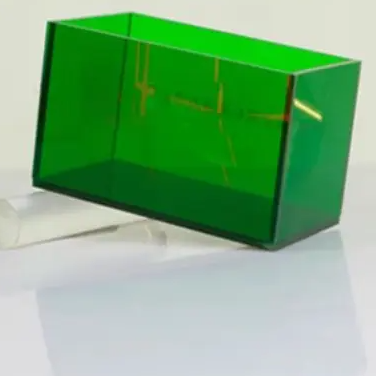
In 2026, the designers and specifiers solving this problem most efficiently aren't fighting with stone, wood veneer, or real glass. They're reaching for green cast acrylic—a material that delivers deep botanical color, premium translucency, and clean fabrication in a sheet format that installs fast, survives heavy use, and photographs beautifully under any lighting condition.
If you're specifying acrylic sheet green colour for partitions, feature walls, light diffusers, or retail displays, the real challenge is balancing aesthetics with fabrication yield, installation speed, and long-term maintenance. This guide covers all of it.
How Green Cast Acrylic Creates a "Natural Light" Effect
The botanical mood that clients want from nature-inspired interiors comes down to one optical property: controlled light transmission. Green cast acrylic delivers this in a way that most alternative materials cannot replicate at the same cost and fabrication ease.
Translucency vs Transparency
Fully transparent acrylic transmits light clearly—you see through it like glass. Translucent acrylic sheet green colour diffuses light as it passes through, creating a soft, glowing effect that mimics light filtered through leaves. This diffused glow is the core visual property that makes the material feel "alive" in an interior setting—especially when backlit or edge-lit with warm white or daylight LEDs.
The degree of translucency is controlled by the colorant concentration and sheet thickness. A thinner sheet in a lighter green tone transmits more light and reads almost luminous. A thicker sheet in a deep forest green absorbs more light, produces a richer, denser color, and is more suitable for privacy screens where you want the glow without visual transparency.
Why Cast Acrylic Delivers Richer Results
Cast acrylic is produced by polymerizing liquid monomer between glass molds—a slower process than extrusion that produces a denser, more optically consistent material. For green cast acrylic specifically, this matters because:
Color depth is more saturated and consistent through the full sheet thickness
Cut and machined edges are cleaner, with less internal stress that could cause micro-cracking during fabrication
Surface quality is more uniform across the panel, which matters when the material is backlit and every internal inconsistency becomes visible
Visual Control Variables
Three variables give designers control over the final appearance:
Variable
Effect on Appearance
Thickness
Thicker = deeper color, less light transmission, more privacy
Backlit = full panel glow; edge-lit = halo effect with dark center; ambient = color accent only
Understanding these combinations before specifying is what prevents the most common outcome: a beautiful sample that looks different when installed in the actual space.
Key Specs and Configurations for Green Cast Acrylic in 2026
Specifying green cast acrylic correctly the first time saves fabrication rework and installation delays. These are the decisions that matter most.
Freestanding screens, bar fronts, heavy-use surfaces
Higher rigidity; allows longer unsupported spans
12mm+
Structural panels, countertops, feature walls
Maximum rigidity; reduced translucency on darker colors
Warpage becomes a risk on large-format panels in thicknesses below 5mm if not fully supported. For spans above 600mm without continuous support, specify a minimum of 6mm and confirm the mounting system before fabricating.
Surface Finishes for Different Nature Looks
Gloss: crisp, reflective, high-end retail feel; shows fingerprints; best for framed or mounted panels that aren't frequently touched
Matte/satin: soft, diffuse, spa or biophilic residential feel; forgiving on touched surfaces; reduces glare from direct lighting
Frosted: maximum light diffusion; strongest "leaf in sunlight" effect when backlit; hides internal LED hotspots effectively
Color Consistency for Acrylic Sheet Green Colour
Batch-to-batch color variation is the most common quality problem on multi-panel projects. For acrylic sheet green colour installations with more than three or four panels, establish these controls before ordering:
Request a physical color sample from the production batch you will receive—not a standard catalog sample
Define a ΔE tolerance if your project requires instrument-verified color matching
For phased projects or future replacements, record the batch code and request matched re-orders from the same colorant lot
Fabrication Compatibility
Green cast acrylic processes well with standard fabrication methods:
Laser cutting: clean edges, suitable for detailed shapes; edge polishing often not required for frosted finish
CNC routing: preferred for large panels and repetitive profiles; slower than laser but better for thick sheet
Drilling: use sharp, slow-speed bits; pilot holes prevent cracking at fixings
Thermoforming: possible for curved panels; requires oven with even heat distribution; not suitable for complex double-curved geometry
Compliance and Safety Notes
Clarify these before specification sign-off:
Fire rating: standard acrylic sheet green colour is combustible; fire-retardant grades are available for commercial and public interior applications—confirm requirements with your building regulations consultant
Scratch resistance: acrylic scratches more easily than glass; specify hardcoated grades for high-touch horizontal surfaces
Cleaning chemicals: solvent-based cleaners, acetone, and alcohol attack acrylic; this must be communicated to facilities management before handover
Where Green Cast Acrylic Works Best
Green cast acrylic solves specific problems across a wide range of interior project types. These are the applications where it consistently outperforms alternatives.
Retail and Hospitality
Backlit menu boards and display plinths: the color creates warmth and brand differentiation; LED edge-lighting is simple to service
Bar fronts and feature niches: translucent panels glow under integrated lighting without the weight and breakage risk of glass
Retail display backdrops: consistent acrylic sheet green colour across multiple panels creates visual cohesion in branded environments
Office and Public Spaces
Privacy screens and partitions: translucent panels share light between zones while maintaining visual privacy—a direct functional advantage over opaque materials
Wayfinding and signage: illuminated panels with routed lettering or graphics perform better in low-light environments than painted surfaces
Residential
Cabinet inserts and door panels: replace clear glass with green cast acrylic for a contemporary botanical look without the breakage risk
Stair and railing infills: lightweight, easy to cut to custom dimensions on site, and available in safety-compliant thicknesses
Decorative wall panels: installed as feature surfaces with concealed LED backlighting behind
How It Solves Common Pain Points
Problem
How Green Cast Acrylic Addresses It
Glare from direct light sources
Frosted or matte finish diffuses and softens light output
"Cold" or sterile interior feel
Deep green translucency adds warmth and organic visual texture
Heavy installation logistics
Fraction of glass weight; no specialist glazing contractors required
Budget pressure vs glass
Lower material cost, simpler handling, reduced breakage on site
Typical edge-lit assembly using green cast acrylic to create a soft nature-inspired glow with clean, serviceable mounting.
Green Cast Acrylic Installation and Selection Guide
Getting the installation details right prevents the most common post-installation problems: stress cracking, visible hotspots, and panels that don't align visually across a run.
Sheet Size and Thickness to Reduce Seams
Plan panel dimensions around standard sheet sizes to minimize waste and seams. For continuous feature walls, larger format sheets reduce visible joints—but require careful handling to avoid flex damage during installation. For runs longer than 2400mm, plan joint locations deliberately (at a column, frame, or lighting break) rather than letting them fall randomly.
Mounting Methods
Method
Best For
Key Requirement
Standoff hardware
Freestanding feature panels, signage
Oversized holes for thermal movement
Perimeter frames
Partitions, cabinet doors, large wall panels
Frame must allow expansion gap on all sides
Concealed cleats
Flush wall installations
Panel must be removable for LED service access
Adhesive bonding
Permanent overlays on flat substrates
Use acrylic-compatible adhesive only; no solvents
Thermal Movement Planning
Acrylic expands approximately 0.07mm per meter per degree Celsius—significantly more than aluminum or steel framing. For a 1200mm panel with a 30°C temperature swing (common near windows), allow approximately 2.5mm expansion on each constrained edge. Oversized fixing holes with shoulder washers, and perimeter gaps in frames, prevent stress cracking over time.
This is the most commonly skipped step in acrylic installations and the most common cause of cracked panels six months after handover.
Lighting Integration Checklist
For backlit or edge-lit green cast acrylic panels:
LED density matched to panel thickness and translucency level—undersized LED strips leave dark zones
Edge polishing specified where edge-lighting is used—unpolished edges scatter light unevenly
Minimum air gap of 25–50mm between LED strip and panel back face to allow heat dissipation and light spread
Service access planned before fixing the panel—LED strips require periodic replacement
Hotspot test performed with a sample panel and the actual LED specification before full installation
Translucent vs Opaque Selection
Requirement
Specification
Privacy + light sharing
Translucent acrylic sheet green colour, frosted or satin finish
Color accent only, no see-through
Opaque green cast acrylic
Maximum glow effect when backlit
Light translucent, gloss finish, thinner gauge
Bold color with minimal light bleed
Dense translucent or opaque, thicker gauge
Maintaining Green Cast Acrylic and Total Cost of Ownership in 2026
The long-term performance of green cast acrylic depends on correct maintenance from day one. These are the protocols that protect appearance and extend panel life.
Cleaning Routine
Use a soft microfiber cloth with mild soap and water or a purpose-formulated acrylic cleaner
Never use paper towels, abrasive cloths, or scouring pads—all cause micro-scratches that accumulate into visible haziness
Chemical avoid list: acetone, solvent-based cleaners, ammonia (glass cleaner), bleach, and alcohol—all attack acrylic clarity and can cause surface crazing
Communicate this list to facilities management and cleaning contractors at handover; maintenance damage is the leading cause of premature acrylic panel replacement
Scratch Management
Light surface scratches can be polished out with a proprietary acrylic polishing compound and a soft cloth—restoring clarity without panel replacement. Deep scratches that catch a fingernail typically require panel replacement. For high-traffic surfaces, specify hardcoated acrylic sheet green colour to extend the polishable service life.
Longevity Factors
UV exposure: standard green cast acrylic has good UV resistance, but prolonged direct sunlight exposure near south-facing windows can cause gradual color shift over years. Specify UV-stabilized grades for window-adjacent applications
Construction phase protection: leave protective film on panels until final clean. Removing it early exposes surfaces to paint overspray, plaster dust, and site handling damage that is difficult to reverse
Yellowing risk: cast acrylic has significantly better UV and thermal yellowing resistance than some lower-grade sheet materials—one of the practical reasons to specify cast over extruded for long-lifecycle interior projects
TCO Comparison
Material
Install Weight
Breakage Risk
Replacement Cost
Cleaning Complexity
Green cast acrylic
Low
Low–medium
Low
Low (correct protocol)
Glass
High
High
High
Low
Polycarbonate
Low
Very low
Low–medium
Medium (scratches faster)
PETG
Low
Low
Low
Medium
For most nature-inspired interior applications, green cast acrylic delivers the best combination of installation cost, breakage risk, and appearance longevity—particularly in retail and hospitality where panels are replaced on a renovation cycle of three to seven years.
Conclusion
Nature-inspired spaces in 2026 demand materials that look alive under light, fabricate cleanly, and install without specialist labor. Green cast acrylic delivers all three—combining deep botanical color, controllable translucency, and lightweight handling in a format that works across retail, hospitality, office, and residential applications.
When you need consistent acrylic sheet green colour across multiple panels, matched across phases, and performing reliably under years of daily use, the specification decisions made before fabrication determine the outcome. Get the thickness, finish, mounting method, and lighting integration right at the brief stage—and the material will deliver exactly what the client brief asked for.
Ready to Specify Green Cast Acrylic for Your Project?
Visit the product page and submit your application conditions, quantity, dimensions or spec, target performance requirements, and current challenge to receive a recommended configuration and quotation:
Q1: What is green cast acrylic, and how is it different from extruded acrylic?
Green cast acrylic is produced by polymerizing liquid monomer between glass molds, creating a denser, more optically consistent sheet than extruded acrylic, which is formed by pushing molten material through a die. For interior applications, cast acrylic delivers richer, more consistent color through the full sheet thickness, cleaner machined and laser-cut edges with less internal stress, and better resistance to surface crazing over time. For acrylic sheet green colour applications where visual quality and fabrication yield matter, cast is the appropriate specification.
Q2: Green cast acrylic vs glass vs polycarbonate—which is best for nature-inspired interiors?
Each material has a different strength profile. Glass has superior scratch resistance and clarity but is heavy, breakage-prone on site, and expensive to handle and replace. Polycarbonate is virtually unbreakable but scratches easily and yellows faster than cast acrylic. Green cast acrylic offers the best balance of color depth, translucency control, fabrication ease, and total cost of ownership for most interior applications—particularly where backlit or edge-lit aesthetics are a design requirement.
Q3: What's the ROI—how does green cast acrylic reduce rework, breakage, or install time?
The ROI case for acrylic sheet green colour over glass is strongest on three factors: lower on-site breakage risk (reducing replacement material and labor cost), no specialist glazing contractors required (reducing installation labor cost), and lighter weight (reducing structural support requirements and handling time). For retail and hospitality projects with renovation cycles of three to seven years, the combination of lower initial install cost and lower replacement frequency typically delivers clear payback over the lifecycle.
Q4: Do I need to modify my existing frames or lighting to switch to acrylic sheet green colour?
Frame modification depends on the thickness of the acrylic sheet green colour you specify relative to your existing frame rebate depth. Since acrylic requires expansion gaps that glass does not, retrofitting into tight glass frames without modification can cause stress cracking—the rebate needs to accommodate both the panel thickness and perimeter clearance. Existing LED lighting can usually be reused, but LED density and placement should be verified against the translucency level of the new acrylic specification to avoid hotspots or dark zones.
Q5: What parameters should I provide to select the right green cast acrylic?
To recommend the right configuration, provide: panel dimensions and thickness requirement or span information; surface finish preference (gloss/matte/frosted); translucency requirement (light-sharing vs privacy vs backlit glow); downstream lighting method (backlit/edge-lit/ambient/none); color target (specific green shade or reference sample); fire rating requirement if applicable; quantity per order and any phased supply requirements; fabrication method (laser/CNC/thermoforming); and installation environment (indoor/outdoor-adjacent, UV exposure, cleaning regime). Submit these details via the green cast acrylic product page for a configuration recommendation and quotation.
Bathware manufacturers do not buy sanitary acrylic sheet only for its color and gloss. They buy a forming material that must heat evenly, stretch over a mold, retain surface quality, bond to reinforce...
An edge-lit lighting product can appear simple from the outside: a thin illuminated panel, a printed graphic or a glowing architectural surface. Inside, however, the optical system depends on a precis...
 EN
EN