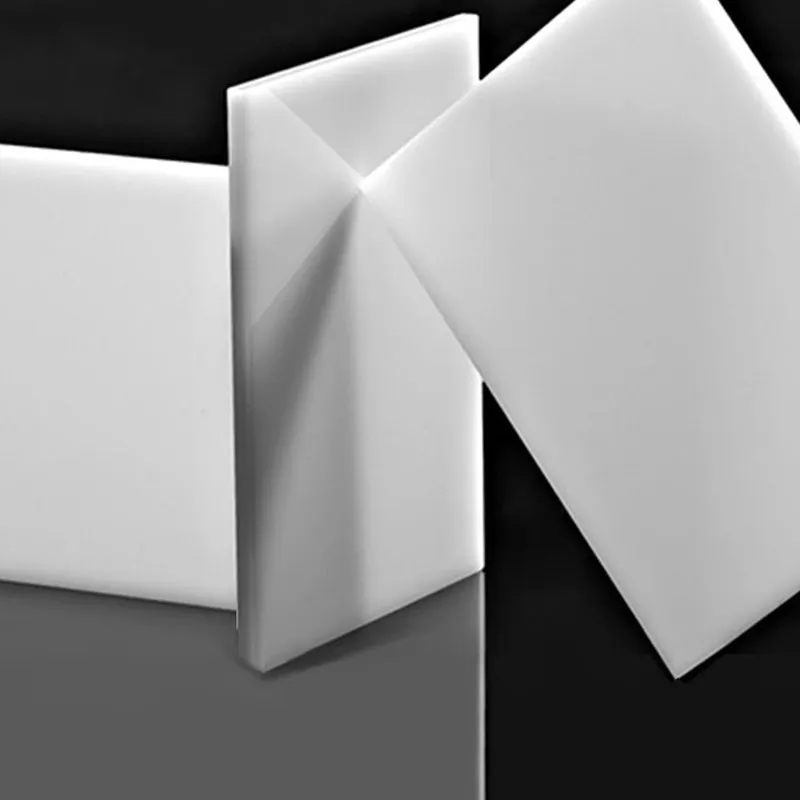
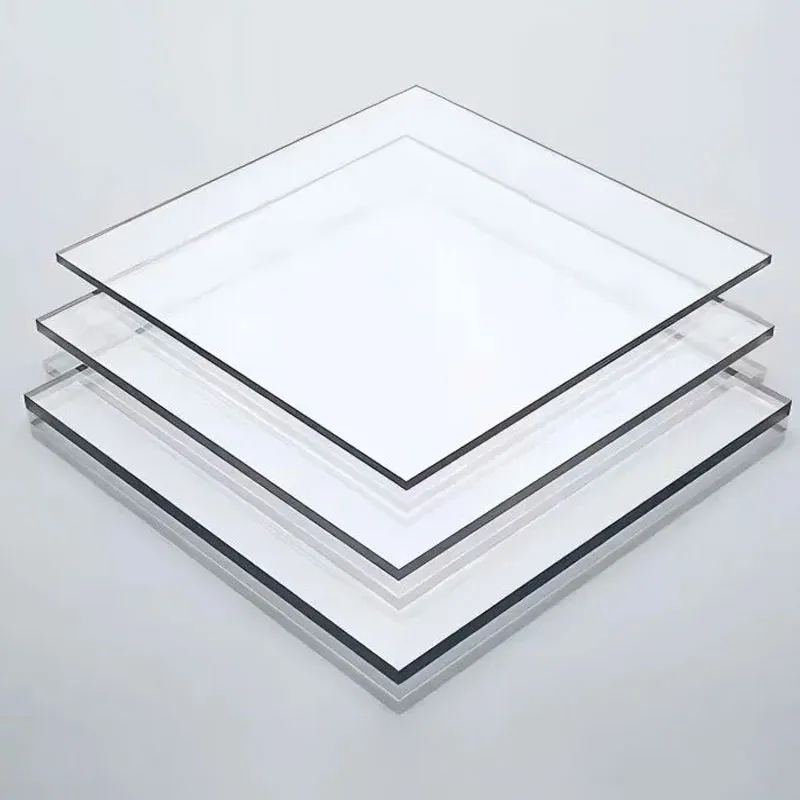
For chain store operators, retail fixture manufacturers, signage contractors, and interior design brands managing multi-location rollouts, the specification of white acrylic sheet is one of the most commercially sensitive material decisions in the project. White appears to be the simplest color specification — no complex color matching, no unusual pigment requirements, no special visual effects. But in practice, white is one of the most demanding colors to manage consistently across bulk orders, because the human eye is exceptionally sensitive to white tone variation, and because the conditions under which white acrylic panels are evaluated — store lighting, LED backlighting, daylight, and the direct visual comparison of adjacent panels — make even small color differences immediately and obviously visible.
White high gloss acrylic sheet adds another layer of complexity to this challenge. The combination of white tone and high gloss surface creates a visual effect where any variation in either dimension — a slightly warmer or cooler white tone, a marginally lower gloss level, a small difference in light transmission for backlit applications — becomes amplified by the reflective surface and immediately apparent to anyone looking at the installation. For a chain brand that has specified white high gloss acrylic for store counters, display cabinets, or brand signage across dozens or hundreds of locations, batch-to-batch inconsistency is not a minor quality issue — it is a brand consistency problem that affects the visual identity of every store in the network.
AML's white acrylic sheets are positioned for signage, retail displays, interior design, durability, weather resistance, easy fabrication, and indoor and outdoor use — with color codes including AN402, AN401, AN408, ivory AN801, and AN215, and thickness options from 2 mm to 20 mm for a wide range of commercial applications. This guide covers the complete picture for B2B procurement teams managing bulk white acrylic orders: why batch-to-batch color inconsistency is a serious commercial risk for chain brands, what white acrylic sheet and white high gloss acrylic sheet are and how they differ, how color consistency is achieved and measured in bulk PMMA production, how to select the right white acrylic specification for specific commercial applications, and what procurement and handling practices protect color consistency through the supply chain and installation process. Secondary keywords relevant to this decision — wholesale white acrylic sheet, bulk PMMA supply, color consistent white plastic, and custom size white acrylic — are addressed throughout.
Why Batch-to-Batch White Color Inconsistency Is a Serious Commercial Risk for Chain Brands and Large-Scale Projects
The commercial case for investing in supplier color management capability — rather than simply sourcing wholesale white acrylic sheet at the lowest available price — starts with a clear understanding of why white color inconsistency creates consequences that go well beyond a visual quality complaint.
The Visual Sensitivity Problem That Makes White Uniquely Challenging
The human visual system is more sensitive to white tone variation than to variation in most other colors. This is because white is perceived as a neutral reference point — the color against which other colors are evaluated — and any deviation from the expected neutral white is immediately interpreted as a quality or cleanliness issue rather than a deliberate design choice. A warm white panel installed next to a cool white panel does not look like two different design decisions — it looks like a mistake, a quality failure, or a sign that the installation is not properly maintained.
This visual sensitivity is amplified in the specific conditions under which white acrylic panels are evaluated in commercial installations. Store lighting — particularly LED lighting with specific color temperatures — can make white tone differences that are barely visible in natural daylight appear stark and obvious. LED backlighting in light boxes and illuminated signage reveals differences in light transmission and opacity that are invisible in non-backlit applications. And the direct side-by-side comparison of adjacent panels in a retail fixture or signage installation creates the most demanding possible evaluation condition — one where even a Delta E difference of 1.5 to 2.0 can be visible to a trained observer and unacceptable to a brand manager.
The Commercial Consequences of White Inconsistency in Chain Brand Projects
For chain brands managing multi-location rollouts, the commercial consequences of white acrylic color inconsistency compound across the scale of the project. A single inconsistent batch affects every store that receives panels from that batch — potentially dozens or hundreds of locations. Rework costs — removing and replacing inconsistent panels, repainting or refinishing affected fixtures, and managing the logistics of replacement panel delivery — can significantly exceed the original material cost. Client rejection of delivered panels creates project delays that affect installation schedules and contractor cash flow. And the reputational damage of delivering a chain-store rollout with visible color inconsistency can affect the contractor's relationship with the brand client for future projects.
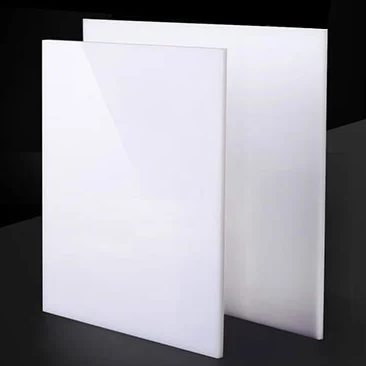
What White Acrylic Sheet and White High Gloss Acrylic Sheet Are — and How They Differ in Commercial Applications
Understanding what white acrylic sheet is — and how white high gloss acrylic sheet differs from standard white acrylic in its visual performance, handling requirements, and color consistency demands — is essential for procurement teams specifying white PMMA for commercial projects.
Product Definition: White Acrylic Sheet as a Commercial Visual Material
A white acrylic sheet is a PMMA sheet formulated to provide a clean white appearance, smooth surface quality, and strong visual performance for signage, displays, interior panels, furniture, partitions, and commercial decoration. PMMA — polymethyl methacrylate — is the material of choice for commercial white panels because it combines high optical clarity with smooth surface gloss, strong color expression, lightweight handling, good weatherability, and compatibility with the cutting, bending, milling, laser cutting, and thermoforming processes that commercial fabrication requires.
AML describes its white acrylic sheets as offering a clean, modern aesthetic for signage, retail displays, and interior design — with high optical clarity, durability, lightweight performance, impact resistance, weather resistance, and easy fabrication for indoor and outdoor applications. AML states that its white acrylic sheets are 8 to 10 times more impact resistant than glass and can be glued, bent, milled, laser cut, and thermoformed — making them a practical and versatile material for the full range of commercial white panel applications.
What Makes White High Gloss Acrylic Sheet Different
A white high gloss acrylic sheet features a polished, reflective surface that creates a sleek, mirror-like visual effect — the premium surface finish that is specified for retail counters, display cabinets, cosmetic display stands, brand signage, and interior wall panels where the combination of white color and high gloss surface creates a premium, contemporary aesthetic. AML explains that a high gloss finish reflects light beautifully and creates a smooth, mirror-like appearance for modern interiors, signage, furniture, and decorative applications.
The high gloss surface of white high gloss acrylic sheet creates additional color consistency demands compared with standard white acrylic. The reflective surface amplifies any variation in white tone — a slightly warmer or cooler white is more visible on a high gloss surface than on a matte or satin surface because the reflective surface creates stronger contrast between adjacent panels. High gloss surfaces are also more sensitive to surface quality variations — minor differences in surface smoothness, protective film adhesion, or handling damage are more visible on a high gloss surface than on a lower-gloss alternative.
| Feature | Standard White Acrylic | White High Gloss Acrylic |
|---|
| Surface finish | Smooth but not mirror-like | Polished, reflective, mirror-like |
| Color consistency sensitivity | High | Very high — gloss amplifies tone differences |
| Handling requirements | Standard care | Extra care to prevent scratches |
| Best applications | General signage, displays, panels | Premium retail fixtures, counters, cosmetic displays |
| Backlit performance | Good | Good — check light transmission uniformity |
| Fabrication | Standard PMMA fabrication | Same — but protect surface during processing |
How Color Consistency Is Achieved and Measured in Bulk White Acrylic Production
The technical mechanism by which consistent white color is achieved across bulk PMMA production — and how Delta E measurement provides the objective quality data that B2B buyers need to manage color consistency across large-scale projects — is the core quality management knowledge that procurement teams need to evaluate supplier capability for wholesale white acrylic sheet orders.
The Five-Stage Color Consistency Production System
Master white standard definition is the foundation of the color consistency system — the agreed reference point against which all production batches are measured. Before mass production begins, the buyer and supplier should agree on the target white tone, color code, gloss requirement, light transmission level, opacity, thickness, and surface finish — and a physical master sample should be produced and approved by both parties. This master sample becomes the reference standard for all subsequent production batches and reorders. For chain brand projects, the master sample approval process should include evaluation under the specific lighting conditions of the installation environment — store lighting, LED backlighting, or daylight — to ensure that the approved white tone performs correctly in the actual installation context.
Automated batching for resin and pigment control is the production process capability that most directly determines batch-to-batch color consistency. In manual batching processes, human measurement error in weighing and mixing resin, pigments, and additives creates variation between batches that translates directly into color inconsistency in the finished sheets. Automated batching systems control the quantities of each component with greater precision than manual processes — reducing the variation in pigment concentration and resin composition that causes white tone differences between batches. For buyers sourcing bulk PMMA supply for chain brand projects, confirming that the supplier uses automated batching rather than manual mixing is one of the most important supplier capability questions.
Colorimeter and spectrophotometer measurement provides the objective color data that converts "this white looks different" into measurable quality information. A colorimeter or spectrophotometer measures the color of each production batch and calculates the Delta E value — the numerical measure of color difference between the batch and the master standard. Delta E measurement provides a consistent, objective basis for quality decisions that visual inspection alone cannot provide — particularly important for white, where the human eye's sensitivity to tone variation makes visual inspection unreliable as a sole quality control method.
Batch-to-master comparison and approval applies the Delta E measurement data to a defined acceptance criterion — rejecting batches that exceed the agreed Delta E tolerance and approving batches that meet the standard. For premium chain brand projects, a Delta E tolerance of 1.0 or below is typically required for side-by-side panel installations. For standard commercial projects, a tolerance of 1.0 to 2.0 may be acceptable. Batches with Delta E values above 3.0 are typically not acceptable for any chain-store consistency application.
| Delta E Range | Visual Perception | B2B Application Recommendation |
|---|
| ΔE ≤ 1.0 | Very difficult to detect by eye | Ideal for premium chain brand rollouts and side-by-side installations |
| ΔE 1.0–2.0 | Slight difference under close inspection | Acceptable for most commercial projects |
| ΔE 2.0–3.0 | Visible under some lighting conditions | Use with caution for adjacent panel installations |
| ΔE > 3.0 | Clearly visible difference | Not recommended for chain-store consistency applications |
Batch record documentation and reorder traceability is the quality management capability that protects color consistency not just within a single order but across the full lifecycle of a chain brand project — including future replacement orders, additional location rollouts, and maintenance replacements. For each production batch, the supplier should record the color code, Delta E value, gloss level, light transmission, thickness, production date, and approved sample reference — creating a traceable record that allows future replacement orders to be matched to the original specification with confidence.
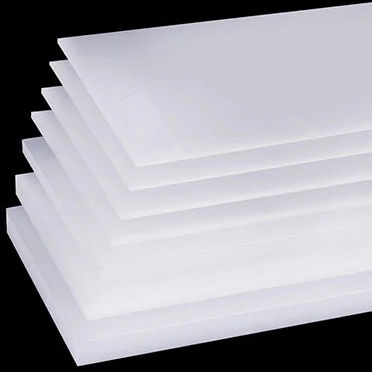
White Acrylic Sheet Selection Guide: Standard White, High Gloss, Translucent, and Specialty Options
The selection of the right white acrylic specification for a specific commercial application involves evaluating the visual performance requirements, fabrication compatibility, installation conditions, and color consistency demands of the application — and understanding how different white acrylic options balance these factors.
Comparative Analysis of White Acrylic Options
Standard white acrylic sheet provides a clean, consistent white appearance for general signage, display panels, interior partitions, and commercial decoration applications where a premium high gloss surface is not required. It is the most versatile white acrylic option and is suitable for the widest range of fabrication methods and installation conditions.
White high gloss acrylic sheet provides the premium reflective surface finish required for retail counters, display cabinets, cosmetic display stands, and brand signage where the combination of white color and mirror-like surface creates a contemporary, high-end aesthetic. Its higher color consistency sensitivity requires more careful supplier quality management and handling practices.
Translucent white acrylic is specified for backlit signage, LED light boxes, and illuminated displays where controlled light transmission is required. The key quality parameter for translucent white acrylic is light transmission uniformity — consistent opacity across the sheet area and between batches — which determines whether the backlit display appears evenly illuminated or shows hot spots and dark areas.
Opaque white acrylic provides strong coverage and a clean white background for privacy panels, display bases, and wall panels where light transmission is not required and maximum opacity is the priority.
Ivory acrylic sheet provides a warmer white tone for interior decoration and furniture applications where a softer, warmer appearance is preferred over the cooler, brighter tone of standard white acrylic.
Application-Based Selection Guide
| Application | Recommended White Acrylic Type | Key Color Control Parameter |
|---|
| Chain-store signage | Standard or translucent white | Color code + Delta E + light transmission |
| Retail display shelves | White high gloss acrylic | Gloss level + scratch protection + batch consistency |
| Cosmetic display counters | White high gloss acrylic | Surface finish + tone consistency |
| LED light boxes | Translucent white acrylic | Light diffusion uniformity + opacity |
| Interior wall panels | Opaque or high gloss white | Tone consistency + sheet flatness |
| Exhibition booths | Custom size white acrylic | Fabrication tolerance + delivery schedule |
| Replacement panels | Same color code and batch reference | Reorder traceability + Delta E matching |
AML Specification Range for Bulk Orders
AML provides white acrylic sheets in common sizes including 1220 × 1830 mm and 1220 × 2440 mm, with thickness options including 2, 3, 4, 4.5, 5, 6, 8, 10, 12, 15, 18, and 20 mm depending on size and product grade — providing the size and thickness range that bulk PMMA supply for large commercial projects requires.
Wholesale White Acrylic Sheet Procurement Checklist and Handling Guide
Sourcing wholesale white acrylic sheet for chain brand projects and large commercial installations requires systematic pre-procurement evaluation of both material performance and supplier quality management capability — and careful handling and storage practices that protect color consistency and surface quality through the supply chain and installation process.
Pre-Procurement Checklist for Chain Brand Buyers and Signage Contractors
Before placing a bulk white acrylic sheet order, procurement teams should confirm the following:
Confirm the white color code required — AN402, AN401, AN408, or other available codes — and request physical color samples for evaluation under the specific lighting conditions of the installation environment
Confirm whether the application requires standard white, high gloss white, translucent white, opaque white, or ivory — and verify that the selected option provides the visual performance required for the specific application
Confirm the Delta E tolerance that the supplier can control — request documentation of the supplier's color measurement process and the Delta E tolerance applied to production batch approval
Confirm that the supplier uses automated batching for resin and pigment control — manual batching processes create higher batch-to-batch variation risk for large-volume orders
Confirm the gloss level specification for high gloss applications — request gloss measurement data and verify that the supplier can maintain consistent gloss levels between batches
Confirm the light transmission level for translucent white applications — request light transmission data and verify uniformity across the sheet area
Confirm the thickness tolerance for the required thickness — thickness variation affects fabrication accuracy and installation fit, particularly for precision retail fixtures and display systems
Confirm the sheet flatness specification — warped or bowed sheets create installation problems and visual inconsistency in flat panel applications
Confirm the custom size capability if standard sizes do not meet the project requirements — verify lead time and minimum order quantity for custom size white acrylic
Confirm the packaging specification for high gloss surfaces — high gloss panels require protective film and careful packaging to prevent surface scratches during transport
Confirm the batch record documentation that will be provided with each shipment — color code, Delta E value, gloss level, light transmission, thickness, and production batch reference
Confirm the reorder matching capability for future replacement orders — verify that the supplier can match the original color code and batch specification for replacement panels ordered months or years after the original installation
Handling and Storage Guide for White High Gloss Acrylic Sheet
Keep protective film on all panels until final installation — the protective film is the primary defense against surface scratches during transport, storage, and fabrication
Avoid dragging sheets across each other or across rough surfaces — even minor surface contact can create scratches that are highly visible on high gloss white surfaces
Use clean cotton or nitrile gloves when handling high gloss panels — fingerprints and skin oils are visible on high gloss white surfaces and can be difficult to remove without risk of surface damage
Store sheets flat in a clean, dry area with adequate support to prevent warping — stacked sheets should be separated by clean protective interlayers
Clean installed panels with mild soap and lukewarm water using a soft microfiber cloth — avoid abrasive cloths, hard brushes, or solvent cleaners that can scratch the surface or damage the gloss finish
Do not dry-wipe dusty surfaces — dry wiping with dust present creates fine scratches that reduce surface gloss and create visible surface haze over time
Record color code, batch number, thickness, gloss level, and supplier documentation for every installation — this information is essential for matching replacement panels in future maintenance orders
Conclusion: White Acrylic Sheet Color Consistency Is a Supplier Capability That Must Be Evaluated Before the Order Is Placed
For chain brands and large commercial projects, consistent white color across bulk orders is not a quality preference — it is a brand consistency requirement that directly affects the visual identity of every installation in the project. The difference between a supplier who can deliver color consistent white plastic across large-volume repeat orders and one who cannot is not visible in a product catalog or a price list — it is visible in the Delta E values, the automated batching capability, the batch record documentation, and the reorder matching process that the supplier can demonstrate before the order is placed.
AML's white acrylic sheets offer high gloss appearance, durability, weather resistance, easy fabrication, and broad application flexibility for signage, retail displays, interiors, commercial spaces, and decorative projects — with the color code range, thickness options, and custom size capability that bulk PMMA supply for large commercial projects requires.
Contact AML Acrylic today to discuss your bulk white acrylic sheet order requirements, target color code, Delta E tolerance, gloss level, light transmission, thickness, custom size requirements, packaging specification, and long-term reorder plan. The AML team can help ensure that your white acrylic specification delivers the color consistency that chain brand projects demand.
Frequently Asked Questions
Q1: What is a white acrylic sheet and what makes it suitable for commercial applications?
A white acrylic sheet is a PMMA plastic sheet formulated to provide a clean white appearance, smooth surface quality, and strong visual performance for signage, displays, interior panels, furniture, and commercial decoration. It is suitable for commercial applications because it combines consistent white color with lightweight handling, impact resistance, easy fabrication, and indoor and outdoor durability.
Q2: What is a white high gloss acrylic sheet and when should it be specified?
A white high gloss acrylic sheet has a polished, reflective, mirror-like surface that creates a premium contemporary aesthetic. It should be specified for retail counters, display cabinets, cosmetic display stands, brand signage, and interior wall panels where the combination of white color and high gloss surface is required for the visual identity of the installation.
Q3: Why is color consistency so important in bulk white acrylic orders for chain brands?
For chain brands, panels from different production batches are installed side by side across multiple locations. Even small differences in white tone — a slightly warmer or cooler white — are immediately visible under store lighting and LED backlighting, creating a visual inconsistency that damages brand identity and requires costly rework and replacement.
Q4: How do suppliers control white acrylic color consistency in bulk production?
Suppliers control white acrylic color consistency through master sample approval, automated batching for resin and pigment control, colorimeter or spectrophotometer measurement of each production batch, Delta E comparison against the master standard, and batch record documentation that supports reorder matching for future replacement orders.
Q5: What should buyers check before placing a wholesale white acrylic sheet order?
Buyers should confirm the color code and request physical samples, confirm the Delta E tolerance the supplier can control, verify automated batching capability, confirm gloss level and light transmission specifications, check thickness tolerance and sheet flatness, confirm custom size availability, verify packaging protection for high gloss surfaces, and confirm batch record documentation and reorder matching capability for future replacement orders.
 EN
EN