Bathware manufacturers do not buy sanitary acrylic sheet only for its color and gloss. They buy a forming material that must heat evenly, stretch over a mold, retain surface quality, bond to reinforcement, survive trimming and assembly, and remain visually consistent across production batches. A sheet that looks flawless before forming can develop whitening, thin corners, bubbles, gloss variation or color shift after it is heated and drawn.
For that reason, a sanitary acrylic purchase specification should connect the sheet to the finished bathtub, shower tray, basin or spa shell. Thickness, material route, pigment, surface film, heating system, draw ratio, mold temperature, vacuum performance and backing structure all influence the result. This guide gives B2B procurement, engineering and quality teams a practical framework for sampling and mass production with AML Acrylic.
What Is a Sanitary Acrylic Sheet?
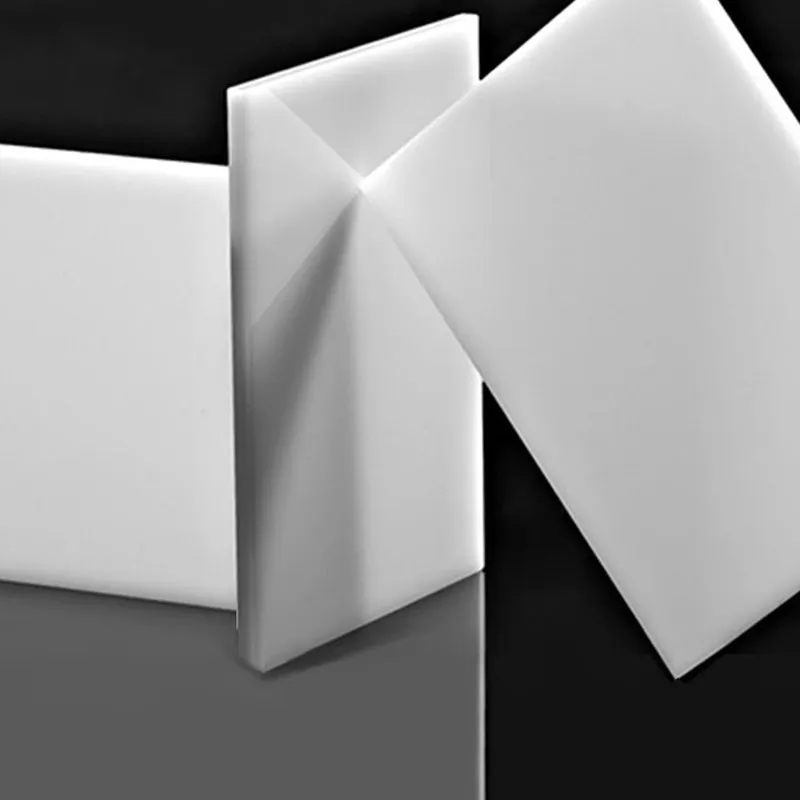
A sanitary acrylic sheet is an opaque or specially colored PMMA sheet engineered for thermoformed bathware components such as bathtubs, shower trays, basins, surrounds and spa shells.
The word “sanitary” describes the end-use category, not a universal promise that every sheet is antimicrobial. Standard sanitary-grade acrylic is valued for its smooth nonporous surface, appearance, formability, color options and ability to create seamless bathware shapes. If antibacterial or antimicrobial performance is required, the buyer must request a specific additive, test method and report. It should not be assumed from the product name.
Sanitary acrylic is commonly supplied in white and other opaque colors. The face surface becomes the visible bathware surface, while the rear may receive fiberglass-reinforced plastic, polyurethane, ABS or another support system depending on the product design. The acrylic provides the visual and touch surface; the backing and frame contribute structural strength.
PMMA density is commonly about 1.18 to 1.19 g/cm³. This low material density supports comparatively lightweight finished products, but the final bathtub or tray weight depends on sheet thickness, reinforcement, frame and hardware. Weight reduction should therefore be calculated from the full structure rather than from acrylic alone.
Sanitary Acrylic Sheet vs General-Purpose Acrylic
Sanitary acrylic differs from general-purpose decorative sheet because it is selected and controlled for deep thermoforming, visible bathware surfaces, color consistency and compatibility with reinforcement processes.
| Factor | Sanitary Acrylic Sheet | General-Purpose Acrylic Sheet | Procurement Implication |
|---|
| Primary use | Bathtubs, shower trays, basins, spa shells and bathroom panels | Signs, displays, glazing, furniture, covers and general fabrication | Specify finished bathware application and forming depth |
| Optical appearance | Usually opaque with controlled white or custom color and gloss | Clear, transparent, translucent or opaque | Approve reflected color and post-form gloss |
| Thermoforming demand | Often deep draw with large area and variable wall thinning | May be flat fabricated or shallow formed | Trial must use the actual or representative mold |
| Visible surface | Face remains the final consumer-facing surface | Surface may be decorative, covered or mechanically finished | Strict defect and protective-film controls are required |
| Reinforcement | Frequently backed with composite or structural layers | May be used without backing | Check adhesion and chemical compatibility |
| Color consistency | Critical across shell, apron, basin and repeat production | Important but project sensitivity varies | Retain master samples and batch records |
| Quality focus | Surface pits, bubbles, inclusions, color, thickness and forming behavior | Dimensions, clarity, color, surface and fabrication behavior | Inspection plan must include pre-form and post-form criteria |
A general-purpose opaque white acrylic may look similar in a warehouse but behave differently during deep forming. The bathware producer should not substitute material without a trial. A change in polymer formulation, sheet route, residual stress or pigment can alter heating time, sag, draw behavior and final gloss.
The purchase order should identify the exact approved grade or supplier code. Descriptions such as “white acrylic, same as last time” are vulnerable to substitution and misunderstandings. The approved sample, thickness, color reference, surface, film and production route should be recorded.
Thermoforming Window for Sanitary Acrylic Sheets
The thermoforming window is the sheet-temperature range in which PMMA becomes sufficiently flexible to form without excessive stress, surface damage or uncontrolled sag.
Technical references for specific PLEXIGLAS cast acrylic grades commonly cite forming temperatures around 130°C to 160°C. This is a useful engineering reference, not a universal setpoint for every sanitary sheet. The correct temperature depends on grade, thickness, heater type, heating time, sheet color, mold geometry and forming method. AML recommends validating the process with the exact sheet and production equipment.
Heating must be uniform through the sheet thickness. If the surface becomes hot while the core remains too cool, the sheet may show uneven draw, stress or local whitening. If it is overheated, the sheet may sag excessively, mark, blister or lose surface quality. Darker colors can absorb radiant heat differently from white, and heater-zone settings may need adjustment.
Temperature should be measured rather than inferred only from oven time. Infrared measurement can help, but emissivity, viewing angle and reflective surfaces affect readings. Contact measurement on test pieces or calibrated process studies may be needed. The production team should define where and when temperature is checked.
Before forming, some PMMA products may require drying if they have absorbed moisture or if the process conditions create bubble risk. The supplier’s technical guidance should be followed. Drying time and temperature must be recorded because excessive preheating can also affect film and surface quality.
How Sanitary Acrylic Sheet Thickness Changes After Forming
Formed wall thickness is the remaining acrylic thickness after the heated sheet stretches over the mold, and it is usually lower in deep corners and high-draw regions than in the original flat sheet.
Nominal sheet thickness does not equal minimum finished-wall thickness. During forming, material moves from low-stretch zones into deeper areas. Corners, drain regions, vertical walls and narrow radii may become thin. The exact distribution depends on mold shape, clamping area, pre-stretch, plug assist, vacuum timing and sheet temperature.
Buyers should specify both starting thickness and minimum acceptable thickness in critical zones of the formed part. A grid of measurement points can be defined on the drawing. Ultrasonic thickness measurement or cut-section inspection may be used depending on the product and equipment.
A thicker starting sheet may improve minimum wall thickness but can require more heating energy and time. It can also increase material cost and change forming behavior. The engineering objective is not to maximize starting thickness blindly, but to achieve the required finished structure with stable forming and reinforcement.
For new molds, a forming trial should map thickness at multiple points. The results can guide heater zoning, mold venting, pre-blow or plug-assist changes. The approved thickness map should become part of the golden-sample documentation.
Mold Design for Bathtubs and Shower Trays
Thermoforming mold design controls how the heated sheet contacts the tool, evacuates air, stretches around radii and releases without visible damage.
Draft angle is required for reliable release. Sharp undercuts can trap the formed shell or create stress during removal. Corner radii should be large enough to allow material flow and avoid extreme thinning. Decorative details should be evaluated against the sheet’s ability to reproduce them without creating whitening or weak areas.
Vacuum holes and channels must remove air efficiently without leaving unacceptable marks on the visible surface. Blocked or poorly distributed vents can cause soft details, trapped air or incomplete forming. The mold surface condition affects gloss and texture transfer; any scratch or contamination can repeat across every part.
Mold temperature influences contact cooling and surface quality. A very cold mold may freeze the sheet before details form. Excessive mold temperature can lengthen cycle time or make release difficult. The process should maintain a controlled mold-temperature range rather than relying on room conditions.
For large bathtub shells, the forming system may use pre-blow, vacuum, pressure or plug assist to manage material distribution. The sheet supplier should receive the drawing and forming method when a deep draw is involved. A material that works for a shallow shower wall may not be appropriate for a complex spa shell.
Sanitary Acrylic Sheet Surface Quality Before Forming
Pre-form surface quality is the condition of the sheet face, including gloss, pits, scratches, inclusions, contamination and protective film, before heat magnifies or redistributes defects.
The visible face should be inspected under directional light before forming. Small scratches that are difficult to see on a flat sheet may become more obvious after the surface stretches over a curve. Dust trapped between film and sheet can leave marks. Film wrinkles can transfer during heating if the film is not suitable for thermoforming.
The supplier and manufacturer should agree on which side is the show face and how sheets are oriented. Pallet labels, film printing or removable stickers can prevent accidental reversal. Operators should wear clean gloves and use racks that do not rub the face surface.
Protective film compatibility is critical. Some films are designed to remain during thermoforming; others must be removed before heating. Using the wrong film can cause adhesive residue, film tearing, trapped gas or surface imprint. The purchase specification should identify the approved film and removal stage.
AML recommends defining defect limits using size, number, location and viewing distance. “No defects” is difficult to inspect consistently. A critical central area may have stricter requirements than a trimmed flange or a hidden reinforcement zone.
Color Consistency in White and Custom Sanitary Acrylic
Sanitary color consistency is the controlled match of hue, brightness, opacity and gloss across flat sheets, formed shells, accessory panels and repeat production batches.
White is not a single color. It can be blue-white, neutral, warm or cream. A small difference may become obvious when a bathtub shell, front apron and wall panel are installed together. Light source and surrounding tile color also affect perception.
Approve a physical master sample at the final thickness and finish. If components use different thicknesses, compare them together because thickness and forming can influence appearance. A formed shell should be included in approval when the draw is deep enough to change visual density.
Instrument measurement can support visual control. The test method should state whether color is measured in reflection, which illuminant and observer settings are used, and how gloss is handled. A Delta E limit should not be copied from another project without confirming that it matches the customer’s visual sensitivity and instrument setup.
Custom colors require disciplined batch planning. Where multiple components must match, it may be safer to produce them from the same batch or reserve enough material for the complete project. Repeat orders should reference the original batch and master sample. If a perfect historical match is not possible, the supplier should communicate this before production.
Buyers reviewing sanitary acrylic sheets should ask whether the quoted color is a standard production color or a custom match, how the sample will be approved, and whether the same formulation is available for future orders.
Common Thermoforming Defects and Root Causes
A thermoforming defect is a visible or structural problem created by material condition, heating, mold design, vacuum, forming sequence or handling.
| Defect | Likely Causes | How to Verify | Corrective Direction |
|---|
| Whitening or stress marks | Sheet too cool, radius too tight, excessive local stretch, residual stress | Review temperature map and location relative to deep draw | Increase uniform heating, revise radius, use pre-stretch or validate another grade |
| Bubbles or blisters | Moisture, overheating, contamination or unsuitable film | Compare dried and undried samples; inspect temperature and film | Follow drying guidance, reduce surface overheating, change film |
| Uneven wall thickness | Poor heater zoning, uncontrolled sag, insufficient plug assist or pre-blow | Create a formed thickness map | Adjust heat profile and forming sequence |
| Loss of gloss | Mold surface, overheating, film imprint, contamination | Compare flat sheet, formed surface and mold condition | Restore mold surface, control temperature and approved film |
| Incomplete detail | Sheet too cool, weak vacuum, blocked vents, early cooling | Check vacuum level, vent pattern and contact timing | Improve venting, heating or mold temperature |
| Color variation | Mixed batches, different thickness, overheating or unequal draw | Compare batch labels and formed thickness | Segregate batch, stabilize heating and approve post-form sample |
| Cracking after trimming | High residual stress, poor tool geometry, notch or incompatible chemical exposure | Inspect crack origin and process history | Optimize forming and trimming; avoid aggressive chemicals |
Corrective action should address the root cause rather than only the symptom. For example, polishing a whitened area may improve appearance temporarily but does not restore lost wall thickness or eliminate residual stress. A defect database with photos, location, batch, temperature and mold conditions can shorten future troubleshooting.
Reinforcement and Backing Compatibility
Reinforcement compatibility is the ability of the formed acrylic shell, backing material and adhesive or resin system to bond without chemical attack, distortion, delamination or visible print-through.
Many bathtubs and shower trays use fiberglass-reinforced polymer or another backing to provide stiffness. The acrylic surface alone should not be expected to carry all structural loads. The reinforcement schedule, frame and support points must be designed for the finished product.
Resins, adhesives and cleaning chemicals should be checked for compatibility with PMMA. Certain solvents can create crazing or cracking, especially in stressed areas. A chemical that does not visibly damage an unstressed flat sample may affect a deeply formed and trimmed shell. Compatibility testing should therefore use formed samples when possible.
Backing application can also create heat. Exothermic curing may distort the shell or change surface appearance if the process is uncontrolled. Resin mix, layer thickness, cure sequence and fixture support should be standardized.
Print-through occurs when backing texture or support points become visible on the face. It can be influenced by acrylic thickness, reinforcement pattern, cure shrinkage and storage temperature. The production trial should include final cooling and aging before surface approval.
Trimming, Drilling and Assembly
Post-form fabrication converts the formed shell into an installable component through trimming, hole making, edge finishing, reinforcement and hardware assembly.
Trim fixtures should locate the shell without forcing it out of shape. Cutting tools must be sharp and supported to avoid chipping. Corners and notches should be designed to reduce stress concentration. If the shell has cooled unevenly, clamping it aggressively during trimming can introduce stress that appears later as cracking.
Drilling and routing parameters should be validated on the formed part. The local thickness may differ from the nominal sheet thickness. Hole position tolerances must account for forming variation. In high-volume production, a go/no-go fixture or coordinate inspection can verify critical interfaces.
Cleaning after fabrication should use compatible, non-abrasive products. Harsh solvents or rough pads can damage gloss and initiate crazing. Operator work instructions should identify approved cleaners and cloths.
Manufacturers purchasing acrylic sheet wholesale for multiple product lines should segregate sanitary grade from general decorative stock. Similar-looking sheets can have different forming behavior, film and color. Warehouse labels and lot traceability reduce accidental substitution.
Quality Control Plan for Mass Production
A sanitary acrylic quality-control plan defines what is inspected at incoming sheet, forming, trimming, reinforcement, final assembly and pre-shipment stages.
Incoming Sheet Inspection
Check supplier, grade, batch, color, thickness, dimensions, film, surface defects, flatness and quantity. Retain a sample from each batch when color or forming behavior is critical.
First-Off Formed Part
Approve surface, detail reproduction, minimum wall thickness, dimensions, color, gloss and trimming allowance. Record heater zones, heating time, sheet temperature, mold temperature, vacuum and cycle data.
In-Process Checks
Use a defined sampling frequency for thickness, surface and key dimensions. Monitor process variables rather than relying only on final inspection. A gradual heater failure can create variation before parts visibly fail.
Final Product Checks
Inspect the assembled bathware for rocking, drainage geometry, frame support, surface appearance, hardware fit and packaging. Where required, perform load, water retention, thermal cycling or other product tests according to the customer’s standard and market requirements.
Traceability
Link finished product serial or batch numbers to acrylic sheet batch, forming date, production line and operator. Traceability makes it possible to isolate a problem without rejecting unrelated production.
Packaging and International Shipping
Export packaging protects the finished sanitary acrylic surface and structure from abrasion, pressure, vibration, contamination and deformation during handling and transport.
Flat sheet and formed bathware require different packaging. Flat sheets need stable pallets, edge protection, clean interleaving and moisture control. Formed shells need supports that prevent nesting pressure from concentrating on thin areas. Direct contact between glossy surfaces should be avoided.
The packaging design should reflect container loading, transit duration, unloading equipment and warehouse stacking. A package that works for local truck delivery may fail during ocean freight and multiple transfer points.
Labels should identify product, color, batch, quantity, orientation and handling limits. If protective film must be removed within a specific period, that instruction should appear in the documents. Packing photos and a loading record provide evidence if damage is reported.
How to Qualify a Sanitary Acrylic Supplier
Supplier qualification determines whether the producer can deliver repeatable sheet formulation, thickness, color, surface quality, forming support, traceability and export packaging.
A supplier audit should examine production capability, raw-material control, sheet route, thickness measurement, color control, surface inspection, film application, batch labeling and complaint handling. For custom colors, ask how formulations are archived and how repeat orders are matched.
Request sample sheets from production-representative equipment. A small laboratory sample may not reflect full-sheet flatness or color uniformity. Where possible, run a trial on the buyer’s mold and return forming data to the supplier.
AML Acrylic supports acrylic sheet programs through a Singapore business base and production resources in China and Indonesia. When working with an acrylic sheet manufacturer in china, international buyers should confirm the contracting entity, manufacturing site, inspection location, warehouse, Incoterm, claim process and technical contact. Clear responsibility is as important as product data.
A supplier should be willing to discuss limitations. If the requested draw is unusually deep or the chemical environment is uncertain, a controlled trial is more credible than an unconditional promise. The goal is a stable production window, not merely a passing first sample.
Sanitary Acrylic Sheet Inquiry Checklist
Definition: An inquiry checklist gives the supplier enough information to recommend a grade, prepare meaningful samples and quote the correct production and packaging scope.
Finished product: bathtub, shower tray, basin, spa shell or wall panel
Drawing, overall dimensions and maximum forming depth
Starting thickness and minimum formed-wall requirement
Color, gloss and master sample
Heater type, mold material and forming method
Expected annual quantity and order frequency
Reinforcement and chemical systems
Required tests, standards and certificates
Protective-film requirement
Sheet size, pallet limit, destination and shipping terms
Sample quantity and approval schedule
Providing these details reduces quotation changes and allows the supplier to flag risks early. If the product is confidential, a simplified drawing can still show draw depth, radii and critical zones under a nondisclosure agreement.
Frequently Asked Questions About Sanitary Acrylic Sheet
These questions address the most common material, forming and quality decisions in sanitary acrylic procurement.
1. Is every sanitary acrylic sheet antibacterial?
No. “Sanitary” commonly refers to bathware use. Antibacterial performance requires a specific additive, claim, test method and report. Buyers should not assume antimicrobial properties unless they are documented.
2. What temperature is used to thermoform sanitary acrylic?
Specific cast PMMA references often identify a forming range near 130°C to 160°C, but the actual process must be validated for the exact grade, thickness, color, heater, mold and forming method. Use measured sheet temperature and supplier guidance.
3. Why does acrylic whiten in deep corners?
Whitening may result from insufficient or uneven heat, excessive stretch, tight radius, residual stress or unsuitable material. Map the defect location, sheet temperature and formed thickness before changing the process.
4. How should white sanitary acrylic color be approved?
Approve a physical master sample and a formed sample under representative lighting. If multiple components must match, compare them together and define the instrumental and visual acceptance method.
5. Can general white acrylic be substituted for sanitary acrylic?
Not without a trial. General sheet may differ in forming behavior, surface, pigment, film and reinforcement compatibility. The substitute should pass the same mold, process and final-product tests.
6. What quality data should accompany a bulk order?
Useful records include grade and batch, thickness, dimensions, color result, surface inspection, retained sample, packing list and any agreed certificate or test report. Critical bathware projects may also require forming-trial data.
Conclusion
A reliable sanitary acrylic program controls the connection between sheet properties, thermoforming conditions, mold design, reinforcement, inspection and repeat-order traceability.
The best sanitary acrylic sheet is not simply the glossiest flat panel. It is the material that forms consistently on the intended equipment, maintains acceptable wall thickness, reproduces the mold, matches the approved color and remains compatible with the backing and assembly process. Those results require a production-representative trial and a shared quality-control plan.
AML Acrylic can review bathware drawings, color targets, thickness needs and sampling requirements for bathtub, shower tray, basin and spa-shell projects. By defining the forming window, golden sample, defect criteria and batch records before mass production, buyers can reduce scrap, color disputes and field failures.
External References:
 EN
EN