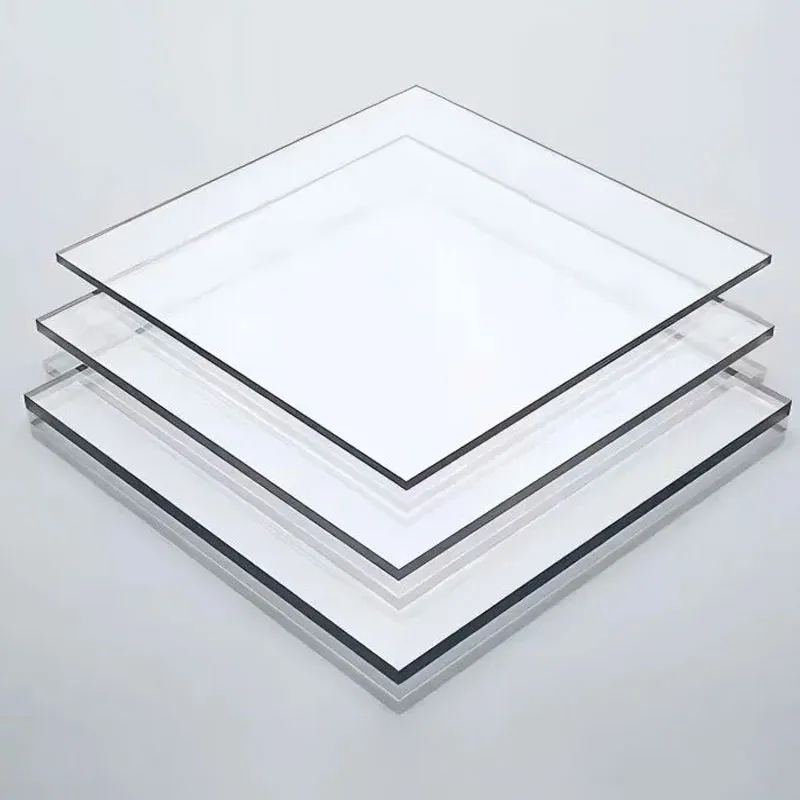
In 2026, the visual standards for high-end retail displays, LED advertising light boxes, exhibition walls, and commercial signage have reached a level where lighting quality is no longer a background consideration — it is a primary design and procurement specification. Luxury brands, cosmetic retailers, jewelry showcases, airport advertising networks, and premium commercial interiors all demand light boxes that are simultaneously thinner, brighter, and more visually uniform than previous generations of display technology. The ultra-thin format has become the aesthetic standard for premium retail environments, and the pressure on display manufacturers and signage contractors to deliver panels that are both slim in profile and perfectly uniform in illumination has never been greater.
At the center of this challenge is the LGP — the Light Guide Plate — the optical component that determines whether an edge-lit light box delivers the uniform, premium illumination that high-end retail demands, or the uneven, edge-bright, center-dark lighting effect that makes even a well-designed graphic look low-quality. Ann LGP light guide plate is not simply a transparent acrylic sheet — it is a precision-engineered optical component whose dot pattern design, substrate quality, and manufacturing precision directly determine the brightness uniformity, energy efficiency, and visual quality of the finished display. And in 2026, laser dotting LGP technology — precision laser-processed micro-dot patterns optimized by algorithm for specific panel sizes, LED layouts, and brightness targets — has emerged as the technically superior alternative to traditional silk-screen printed dot patterns for premium display applications.
AML states that its acrylic light guide plates provide bright, soft illumination, uniform light distribution, and lower power consumption for diverse lighting applications — with UV stability, customizability, machinability, and compatibility with the full range of fabrication processes that commercial display manufacturing requires. This guide covers the complete picture for display manufacturers, signage contractors, retail fixture suppliers, and lighting designers: why ultra-thin light boxes struggle with uneven brightness, what an LGP light guide plate is and how it functions as an optical system, how laser dotting technology improves on traditional silk-screen printing for large-format and premium applications, how to select the right LGP specification for specific display applications, and what procurement and maintenance practices protect LGP performance over the display's service life. Secondary keywords relevant to this decision — laser dotting LGP, acrylic light guide, ultra-thin lightbox panel, and custom LGP solutions for high-end retail displays — are addressed throughout.
Why Ultra-Thin Light Boxes Struggle with Uneven Brightness — and Why This Is a Commercial Problem for Premium Display Manufacturers
The commercial case for investing in precision LGP technology starts with a clear understanding of why ultra-thin edge-lit light boxes are inherently prone to uneven brightness — and why this optical challenge creates serious commercial consequences for manufacturers supplying premium retail and commercial display applications.
The Physics of Edge-Lit Light Distribution in Ultra-Thin Panels
In an edge-lit light box, LED strips are positioned along one or more edges of the panel — not behind the display surface as in a direct-lit configuration. Light enters the acrylic light guide plate from the edge and travels through the panel by internal reflection. The fundamental optical challenge of this configuration is that light intensity naturally decreases with distance from the LED source — the areas of the panel closest to the LED edge receive more light than the areas furthest from the edge, creating the characteristic "bright edges, dark center" effect that is the most common and most commercially damaging quality problem in large-format edge-lit light boxes.
This challenge becomes more severe as panel size increases and as panel thickness decreases. In a large-format ultra-thin lightbox panel, the light must travel further from the LED edge to reach the center of the panel, and the thinner acrylic substrate provides less material for light to travel through — both factors that increase the brightness gradient from edge to center. Without a precisely designed dot pattern that compensates for this natural light attenuation, large ultra-thin panels will inevitably show the bright-edge, dark-center effect that makes premium retail graphics look uneven and low-quality.
The Commercial Consequences of Uneven Brightness in Premium Display Applications
For luxury retail brands, cosmetic counters, jewelry displays, airport advertising networks, and premium commercial interiors, uneven brightness in a light box is not an acceptable quality variation — it is a rejection criterion. A dim center makes a premium brand graphic look poorly maintained. LED hotspots near the frame create a visual distraction that draws attention away from the brand message. And brightness inconsistency across a network of retail locations — where some panels are more uniform than others — creates a brand consistency problem that affects the visual identity of the entire retail network.
The commercial consequences for display manufacturers and signage contractors who deliver uneven light boxes to premium clients include panel rejection and replacement at the manufacturer's cost, damage to the client relationship and future project opportunities, and the reputational risk of being associated with low-quality display work in a market segment where visual quality is the primary competitive differentiator.
What an LGP Light Guide Plate Is and How It Functions as the Optical Core of an Edge-Lit Display System
Understanding what an LGP is — and how the complete LGP light guide plate system works together to convert edge-mounted LED light into uniform front-surface illumination — is essential for display manufacturers and procurement teams evaluating LGP options for premium display applications.
Product Definition: LGP as a Precision Optical Component
An LGP, or Light Guide Plate, is an optical acrylic panel designed to guide LED light from the edge of the panel and release it evenly from the front surface. It is the central optical component of an edge-lit light box system — the component that determines whether the LED light entering from the edge is distributed uniformly across the full panel surface or concentrated near the edges. AML uses acrylic as the main light guide plate material because of its optical performance, durability, lightweight nature, high light transmission, and excellent diffusion performance — properties that make acrylic the preferred substrate for precision LGP applications.
An acrylic light guide is not simply a transparent plastic sheet — it is an engineered optical component whose dot pattern, substrate quality, edge polishing, and dimensional precision all contribute to the brightness uniformity, energy efficiency, and visual quality of the finished display. The difference between a standard acrylic sheet and a precision LGP light guide plate is the difference between a passive optical element and an active optical management system.
The Complete LGP System Architecture
| Component | Optical Function |
|---|
| Acrylic light guide plate | Guides and distributes LED light from edge to surface |
| LED strip | Provides the light source from one or more edges |
| Laser dot pattern | Extracts and redirects light toward the front surface |
| Reflective backing sheet | Returns backward-directed light toward the front |
| Diffuser sheet | Softens light output and reduces visible dot patterns |
| Graphic film | Displays the advertising or brand visual |
| Frame structure | Holds the ultra-thin panel system together and manages heat |
Each component in this system contributes to the final brightness uniformity — but the LGP dot pattern is the component that most directly determines whether the system achieves the uniform illumination that premium display applications require.
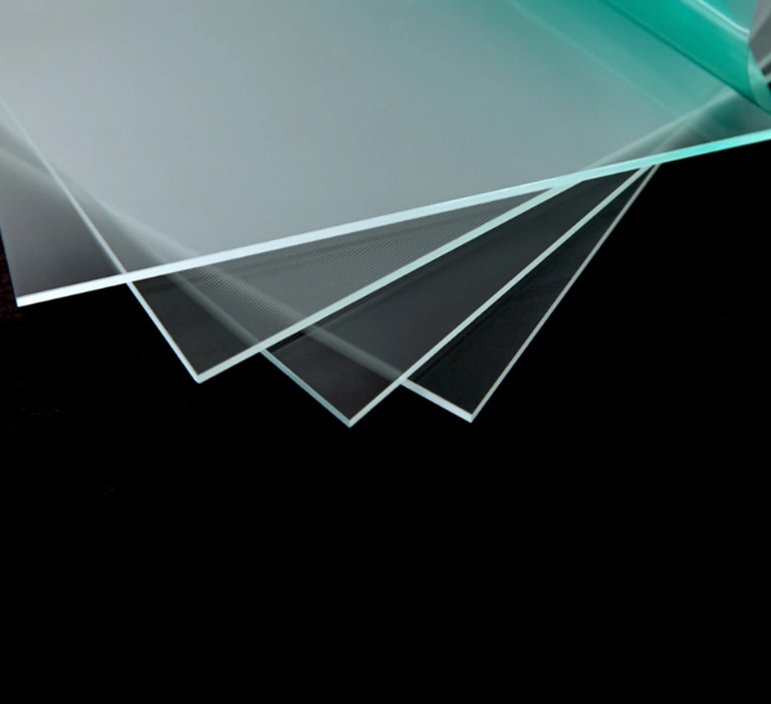
How Laser Dotting LGP Technology Solves the Bright-Edge, Dark-Center Problem
The technical mechanism by which laser dotting LGP technology achieves superior brightness uniformity compared with traditional silk-screen printed dot patterns — and why algorithm-optimized dot density is the key to solving the large-format brightness distribution challenge — is the core technical knowledge that display manufacturers need to specify LGP correctly for premium applications.
How Laser Dotting Creates an Optical Map for Uniform Light Extraction
Laser dotting LGP uses precision laser processing to create micro-dots on the acrylic surface. These dots are physical microstructures — not ink deposits — that break the internal light path and redirect light upward through the display surface. The key insight of laser dotting technology is that the dot pattern is not uniform across the panel — it is an optical map where dot density, dot size, and dot spacing are varied across the panel area to compensate for the natural variation in light intensity from the LED edge.
Near the LED edge, where light intensity is naturally high, the dot density is lower — fewer dots are needed to extract adequate light for uniform front-surface brightness. In the middle of the panel, where light intensity has decreased as it travels away from the LED source, the dot density is higher — more dots are needed to extract sufficient light to match the brightness of the edge areas. At the far side of the panel from the LED source, where light intensity is lowest, the dots may be larger or more densely packed to maximize light extraction from the remaining available light.
Why Algorithm-Optimized Dot Density Is the Key to Large-Format Performance
The design of an effective laser dot pattern for a large-format ultra-thin lightbox panel is not a simple geometric exercise — it is an optical engineering problem that requires algorithm-based calculation of the light distribution across the specific panel geometry, LED layout, and brightness target of the application. The algorithm must account for the panel dimensions, the number and position of LED input edges, the LED power and spacing, the acrylic substrate thickness and optical properties, and the target brightness uniformity — and calculate the dot density distribution that will produce the most uniform front-surface brightness across the full panel area.
| LGP Panel Area | Natural Light Condition | Algorithm-Optimized Dot Strategy |
|---|
| Near LED edge | Naturally high intensity | Lower dot density — less extraction needed |
| Middle area | Reduced intensity | Higher dot density — more extraction required |
| Far side from LED | Lowest intensity | Largest or densest dots — maximum extraction |
| Corners | Risk of shadow or hotspot | Local compensation pattern |
| Large-format panels | High uniformity challenge | Full algorithm-based optical design |
Laser Dotting vs Traditional Silk-Screen Printing: Why the Technology Difference Matters
The comparison between laser dotting and traditional silk-screen printed dot patterns is not simply a manufacturing process comparison — it is a comparison of optical performance, durability, and customization capability that directly affects the quality and longevity of the finished display.
| Performance Factor | Laser Dotting LGP | Silk-Screen Printed LGP |
|---|
| Dot creation method | Precision laser-processed physical microstructure | Ink-printed dot pattern on acrylic surface |
| Long-term durability | No ink layer to peel, fade, or delaminate | Ink may age, wear, or detach over time |
| Optical precision | High digital accuracy — dot size and position controlled by laser | Depends on screen-printing registration quality |
| Light absorption | No ink absorption — all light redirected | Ink may absorb some light, reducing efficiency |
| Customization flexibility | Digital pattern adjustment for each panel specification | Requires new screen setup for each pattern change |
| Large-format performance | Algorithm-based design for any panel size | Uniformity control more difficult at large scale |
| Best application | Premium ultra-thin light boxes, high-end retail displays | Standard or cost-sensitive panel applications |
LGP Component Breakdown and Custom LGP Solutions for High-End Retail Displays
The performance of a complete LGP system depends on the quality and specification of every component — and the ability to customize the LGP design for the specific requirements of each display application is what distinguishes a precision optical solution from a standard commodity product.
Core Components That Determine LGP System Performance
Acrylic substrate quality is the foundation of LGP optical performance. The optical clarity, light transmission, surface smoothness, and dimensional consistency of the acrylic substrate determine how efficiently light travels through the plate and how precisely the dot pattern can control light extraction. AML's acrylic LGPs offer UV stability to help prevent yellowing and degradation — a critical property for display applications where long-term color consistency is required.
Laser dot pattern precision is the component that most directly determines brightness uniformity. The precision of the laser processing — dot size consistency, position accuracy, and surface quality — determines how accurately the algorithm-optimized dot density distribution is realized in the physical plate.
Edge polishing quality determines how efficiently LED light enters the acrylic plate from the edge. A poorly polished edge scatters light at the entry point, reducing the total light available for distribution across the panel and creating visible brightness variation near the LED source.
Reflective backing sheet returns light that is directed backward — away from the display surface — back toward the front, improving the overall light utilization efficiency of the system and contributing to brightness uniformity.
Diffuser sheet softens the light output from the LGP surface, reducing the visibility of individual dots and LED hotspots and creating the smooth, even illumination that premium display applications require.
Custom LGP Solutions for High-End Retail Displays
Standard panel sizes may be adequate for simple signage applications, but custom LGP design is required for the full range of premium display applications. AML's acrylic LGPs can be cut, drilled, shaped, thermoformed, machined, laser-cut, and joined with adhesives or mechanical fasteners — providing the fabrication flexibility that custom display projects require.
Custom LGP solutions are particularly important for: ultra-thin retail light boxes where the panel thickness constraint requires precise optical design to achieve adequate brightness uniformity, large-format retail display walls where the panel size creates a significant brightness gradient challenge, irregular-shaped light boxes where standard rectangular dot patterns cannot provide uniform coverage, premium cosmetic and jewelry display counters where the combination of ultra-thin profile and high brightness uniformity is a brand specification requirement, and multi-store retail rollout projects where consistent brightness performance across all locations is a brand consistency requirement.
Design Parameters That Buyers Must Define Before Ordering
Before ordering a custom LGP light guide plate, buyers should define: panel length and width, acrylic thickness, LED input configuration (single-side, double-side, or four-side), LED power and strip spacing, required brightness level and uniformity target, frame depth constraint, graphic material and opacity, viewing distance, indoor or outdoor installation, edge polishing requirement, diffuser and reflector specification, and packaging and scratch-protection requirements for transport and assembly.
LGP Procurement Checklist and Long-Term Maintenance Guide
Selecting and procuring the right LGP for a premium display application requires systematic evaluation of both optical performance requirements and supplier technical capability — and careful handling and maintenance practices that protect LGP optical performance through assembly, installation, and long-term operation.
Pre-Procurement Checklist for Display Manufacturers and Signage Contractors
Before placing an LGP order, buyers should confirm the following:
Confirm that the supplier can provide custom dot pattern design for the specific panel size, LED layout, and brightness target — not just standard patterns
Confirm that the supplier uses algorithm-optimized dot density rather than uniform or manually designed patterns — algorithm optimization is essential for large-format panels
Confirm the acrylic thickness options available and verify that the selected thickness is appropriate for the panel size and frame depth constraint
Confirm the maximum panel size that the supplier can process with laser dotting — large-format panels require larger laser processing equipment and more sophisticated optical design
Confirm the brightness uniformity that can be targeted for the specific panel specification — request sample panels for brightness testing before committing to production orders
Confirm the LED strip type and spacing recommendation for the specific panel specification — the LGP dot pattern design must be matched to the specific LED source characteristics
Confirm the edge polishing specification — verify that the supplier can provide the edge quality required for efficient light entry
Confirm the UV stability of the acrylic substrate — UV-stable acrylic is essential for display applications where long-term color consistency is required
Confirm the diffuser and reflector material recommendations for the specific application
Confirm the packaging specification for transport — the laser-dot surface and optical faces of the LGP must be protected from scratches during transport and assembly
Confirm repeat-order consistency capability for retail rollout projects — verify that the supplier can reproduce the same dot pattern and optical performance for future orders
Maintenance Guide for Long-Term LGP Performance
Keep protective film on all optical surfaces until final assembly — the laser-dot surface is the most optically sensitive surface and must be protected from scratches throughout the assembly process
Avoid scratching the laser-dot surface during handling, assembly, and installation — even minor surface scratches can create visible bright spots or dark areas in the finished display
Clean optical surfaces with a soft microfiber cloth and mild soap and water — avoid strong solvents, abrasive cloths, or dry wiping that can scratch the surface
Keep dust away from the reflector and diffuser layers during assembly — dust contamination between layers creates visible dark spots in the finished display
Install LED strips evenly along the edge with consistent spacing — uneven LED spacing creates brightness variation that the dot pattern cannot fully compensate
Ensure proper heat dissipation around LED strips — excessive heat reduces LED lifespan and can cause brightness fluctuation and color shift over time
Avoid bending or forcing the acrylic panel during installation — acrylic is rigid and can crack if subjected to bending stress
Check the power supply for flicker and voltage stability — power supply problems create brightness fluctuation that is visible in the finished display
Store spare panels flat in clean, dry packaging with protective interlayers — stacked panels without protection can cause surface scratches and optical damage
Record panel size, thickness, dot pattern specification, LED layout, and batch number for every installation — this documentation is essential for matching replacement panels in future maintenance orders
Conclusion: LGP Is the Optical Core of Next-Generation Ultra-Thin Light Boxes — and Laser Dotting Is the Technology That Makes Premium Performance Possible
In 2026, the visual demands of premium retail displays, luxury brand signage, and high-end commercial lighting have made LGP optical performance a primary competitive differentiator for display manufacturers and signage contractors. A well-designed laser dotting LGP light guide plate — with algorithm-optimized dot density, precision laser processing, UV-stable acrylic substrate, and custom design for the specific panel size and LED layout — can solve the bright-edge, dark-center problem that limits large-format ultra-thin light boxes, deliver the uniform, premium illumination that luxury retail brands demand, and provide the long-term optical stability that ink-based dot patterns cannot match.
For brands, sign makers, lighting manufacturers, and display suppliers seeking custom LGP solutions for high-end retail displays, AML's acrylic LGP products support uniform illumination, optical clarity, custom processing, and the fabrication flexibility that premium commercial display projects require.
Contact AML Acrylic today to discuss your light box size, LED layout, acrylic thickness, brightness uniformity target, frame depth constraint, dot pattern requirements, and retail display application. The AML team can help recommend a customized LGP light guide plate solution that delivers the uniform, energy-efficient illumination that your premium display project demands.
Frequently Asked Questions
Q1: What is an LGP and why is it important for light box displays?
An LGP, or Light Guide Plate, is an optical acrylic panel that guides LED light from the edge of a light box and distributes it evenly across the front surface. It is the most important optical component in an edge-lit light box system — the component that determines whether the display achieves uniform brightness or shows the bright-edge, dark-center effect that makes premium graphics look low-quality.
Q2: What is laser dotting LGP and how does it differ from silk-screen printed LGP?
Laser dotting LGP uses precision laser processing to create physical micro-dot microstructures on the acrylic surface, rather than printing ink dots as in silk-screen printing. Laser dotting provides higher durability — no ink to peel or fade — greater optical precision, better light efficiency without ink absorption, and more flexible customization for different panel sizes and LED layouts.
Q3: Why do large light boxes often appear dark in the center?
In large edge-lit light boxes, light intensity naturally decreases as it travels away from the LED source. Without an optimized dot pattern that compensates for this attenuation — using higher dot density in the center and lower density near the edges — the panel will show the characteristic bright-edge, dark-center effect that is the most common brightness uniformity problem in large-format displays.
Q4: What is algorithm-optimized dot density and why does it matter?
Algorithm-optimized dot density means that the dot size, spacing, and distribution across the LGP surface are calculated by optical design algorithms based on the specific panel dimensions, LED layout, and brightness target — rather than using a uniform or manually designed pattern. Algorithm optimization is essential for large-format panels where the brightness gradient from edge to center is significant and cannot be adequately compensated by simple uniform dot patterns.
Q5: What should buyers confirm before ordering a custom LGP light guide plate?
Buyers should confirm custom dot pattern design capability, algorithm-optimized dot density, acrylic thickness options, maximum panel size, brightness uniformity target, LED strip type and spacing recommendation, edge polishing specification, UV stability, diffuser and reflector recommendations, packaging protection for transport, and repeat-order consistency capability for retail rollout projects.
 EN
EN